Bliss Finder Sports & Entertainment
Background & History
Almost all males grow up wanting to be tough as it is an innate part of being a protector. However, there is normally something that inspires one to begin their quest for self-improvement that maximizes one’s potential. For me, it was seeing the movie Bloodsport starring Jean-Claude Van Damme for the first time. After watching that movie, I fantasized about finding a Senzo Tanaka that would turn me into what I believed Frank Dux was at the time and become this “unbeatable Ninja.”
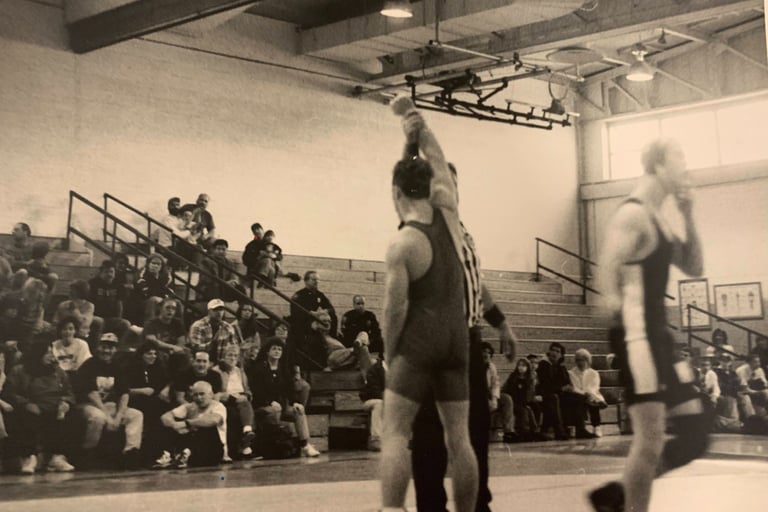
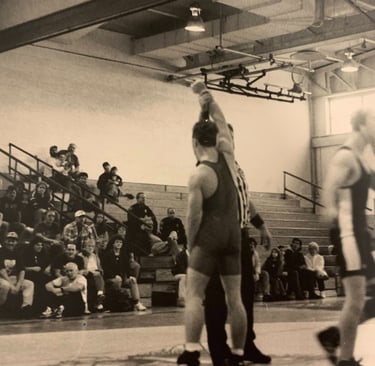
As a result, I told my parents that I want to learn martial arts. My parents signed me up at a no-nonsense Isshinryu Karate school - Kinben Dojo. What made this school different was that sparring was the bulk of the training and it took 10-15 years to be awarded a black belt. After a little while, I approached my parents about wanting to learn how to wrestle, so they signed me up for the local wrestling team and joined Team Hammer Wrestling Club under the tutelage of the late Miles Hahn (I reference these in my song “Father & Son”). One of my dreams as a teenager was to box, but I did not start training until I was 23 when I joined Ike’s Boxing Gym.
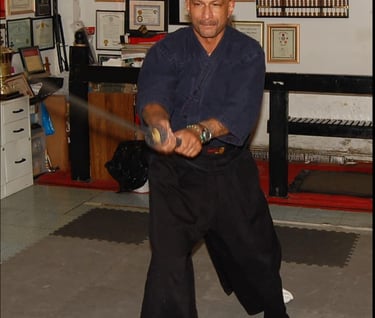
At this point, I went around dabbling in various martial arts. I started attending different schools and classes, purchasing books and instructional DVDs and practicing the techniques, and finding sparring partners and training partners. Through my place of employment, I met Malenga Shaka-Ra (at the time, his title was Fundi) who began providing me with private lessons in the African Diasporic Martial Art of Watu Upatano. Sometimes, higher level students would also attend to provide me with different animal styles to practice with. One day, Grandmaster Leon Crowley (pictured below) happened to attend a lesson. Everyone yielded to his expertise despite his styles being different. At that time, he had over 40 years of training (by now over 60).
After this day, Grandmaster Leon Crowley became our teacher. He taught us multiple times per week all for free. He taught us in various locations from his house to parks to apartment complexes, etc. We were not just taught in a martial arts school or training hall. His philosophy was to be prepared for any confrontation in any environment regardless of what you are wearing. Sometimes, he would randomly perform a surprise attack with a weapon mid-conversation to see if we were ready. Over his decades, he earned black belts and became lineage holder in specific style (even to this day, he has a Silat master who came from Indonesia to his house to train him in the highest levels of Silat in his retirement). He taught us and passed down JKD, applied Kung Fu, Bando, and eventually his family system Shubido (although none of us mastered and reached his level). After and while learning from Grandmaster Crowley, I proceeded to improve my MMA and grappling by attending several MMA/NHB/BJJ schools and practitioners' houses for private lessons to improve my skill.
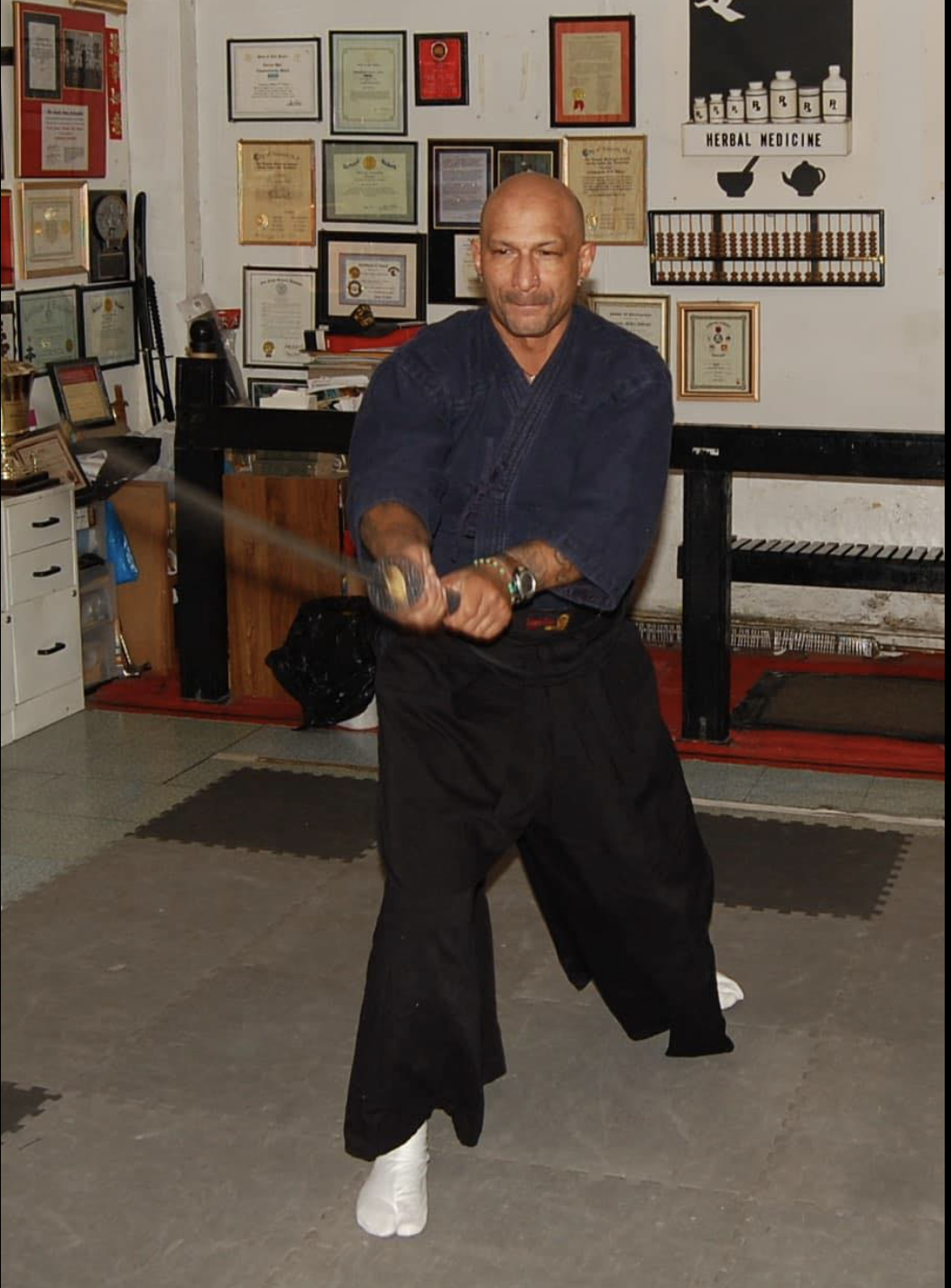
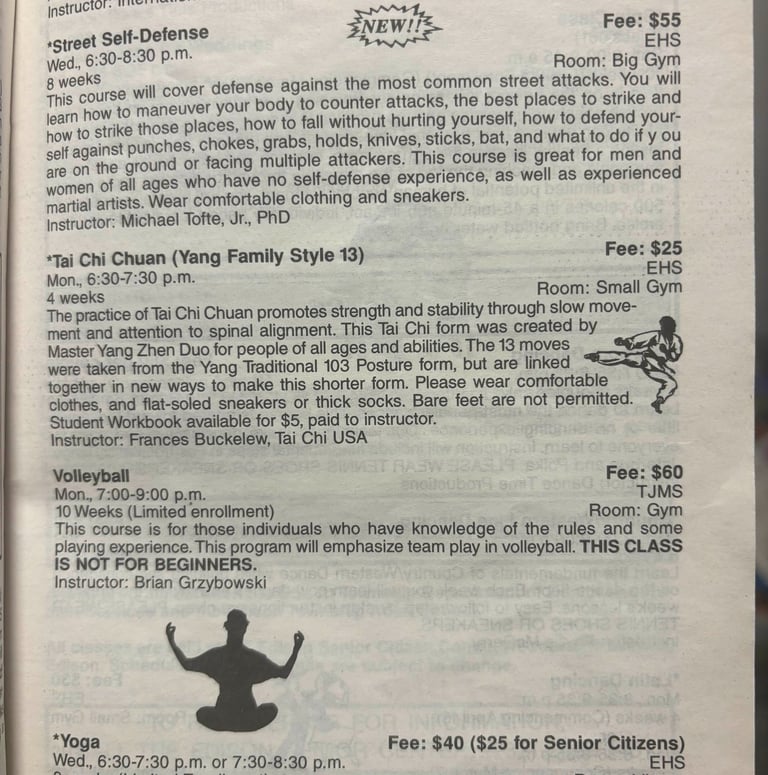
During this time, I transitioned to an instructor. I took on the roles of self-defense instructor at Edison Adult School and a Kung Fu instructor for Orange Recreation Department. Under the banner of the American Freestyle Martial Arts Association, (AFMAA), we would go onto make a series of self-defense videos; black belt home study courses; and health and training videos. Police officers, civilians, and college students began requesting private lessons, so I began training people 1-on-1. As an instructor, the self defense courses were easier to teach. When it comes to the more traditional training, having backgrounds in various and knowing that certain techniques and strategies work better based on temperament, body types, muscle memory, and bodily attributes made it difficult. I began blending arts together and renaming them to have both titles or an American version of the arts. Eventually, I decided to just blend everything together under the title Tofte Urban Martial Arts, or TUMA.
TUMA Training Methods
If one were to watch videos on martial arts training, one would notice that some schools do everything in slow motion; some spar and some do not; as well as a variety of approaches to training. They all have their advantages and disadvantages. TUMA tries to incorporate the whole gamut and provide the why behind.
Slow drilling
Medium drilling
Fast drilling
Situational Sparring
Free Sparring
Slow Drilling
One often sees this type of training in Bujinkan Ninjutsu, Aikido, some Tai Chi schools, Systema, and some of the more traditional soft arts. The advantage of this training is that it imprints the movements into one’s subconscious mind and muscle memory. One will find that they will do the moves by surprise and without thinking about it. The weakness of this type of training is that if one has never tried it against resisting opponents at full speed, they will have difficulty pulling anything off after the initial reaction.
Medium & Fast Drilling
The advantage of this is that it takes the same approach but does them at full speed. This sill help you establish timing and distance, but not necessarily resistance.
Sparring
Sparring is the best way to learn how to implement techniques against a resisting opponent. Balance is the key. Too much can lead to injury, which potentially led some to the other extreme of not doing it at all. Free sparring allows for one to develop speed, strength, the ability to deal with fear, and the feeling of getting hit. Situational sparring prepares one to deal with sneak attacks, weapons, and multiple attacker scenarios that one does not get from free sparring.
Directional Movement
The human body has limitations. Whether it is a limb or weapon, they can only move in certain directions. Once one is familiar with the directions and moving with them, teaching combat and engaging with them becomes much easier as one learns to address accordingly.
TUMA Principles
Principle #1 Targets and Strikes: Strike the opponents weakest targets with your most powerful strike as rapidly as possible.
Principle #2 – The Path of Non-Resistance/ Going With the Flow
Don’t resist the force of a bigger, stronger opponent. Go with it and force him to commitall of his energy in one direction and use it against him. When a person commits his force in your direction, he also commits all of his balance.
Principle #3 – Whole Body Power
Use the power of your whole body in every strike. The power of your whole body is contained in the hips, spine and feet.
Principle #4 – The Push/Pull Principle
By simultaneous pushing and pulling, you can break a person’s center of gravity as well as their bones, tendons, and ligaments. Almost all takedowns and locks are based on this principle.
Principle #5 – Don’t Fight your Opponent’s Fight
Don’t try to box a boxer, wrestle a wrestler, kick box a kick boxer, or submit a submissions specialist. Learn the weaknesses in each of their game and exploit them.
Principle #6 – Be Like the Wind
The best way to counter a punch, grab, choke, et cetera is to not let the person touch you. This is done either by evading and intercepting.
Principle #7 – Lessons from the Turtle
The elbow is the best protector of your face especially against round punches and round kicks. It is also an effective deflector of jabs. Both of your elbows should be up with your arms in a triangle in turtle stance. This protects your face the same way a turtle’s shell
protects it from the harm of a predator.
Principle #8 – The Weakness of the Thumb
In any grab the weakness is in the thumb followed by the beginning of the wrist. Your whole body is stronger. If you use your whole body, you can break almost anyone’s grip.
Principle #9 – How to Avoid Getting Thrown or Taken Down
For a person to easily throw you, he needs to get his hips under yours.
Principle #10 – How to Defend a Lock
Go with it (move in the same direction) or against it (move in the opposite direction and push).
Principles 11+
These deal with various situations from the ground to multiple attackers to specifics for each type of weapon. They would be too long to list.
Contact
Bliss Finder Sports & Entertainment LLC PO Box 5053 Somerset, NJ 08873
Phone (908) 524-0486
© 2025. All rights reserved.
Reach out for collaborations, consulting services or questions.